

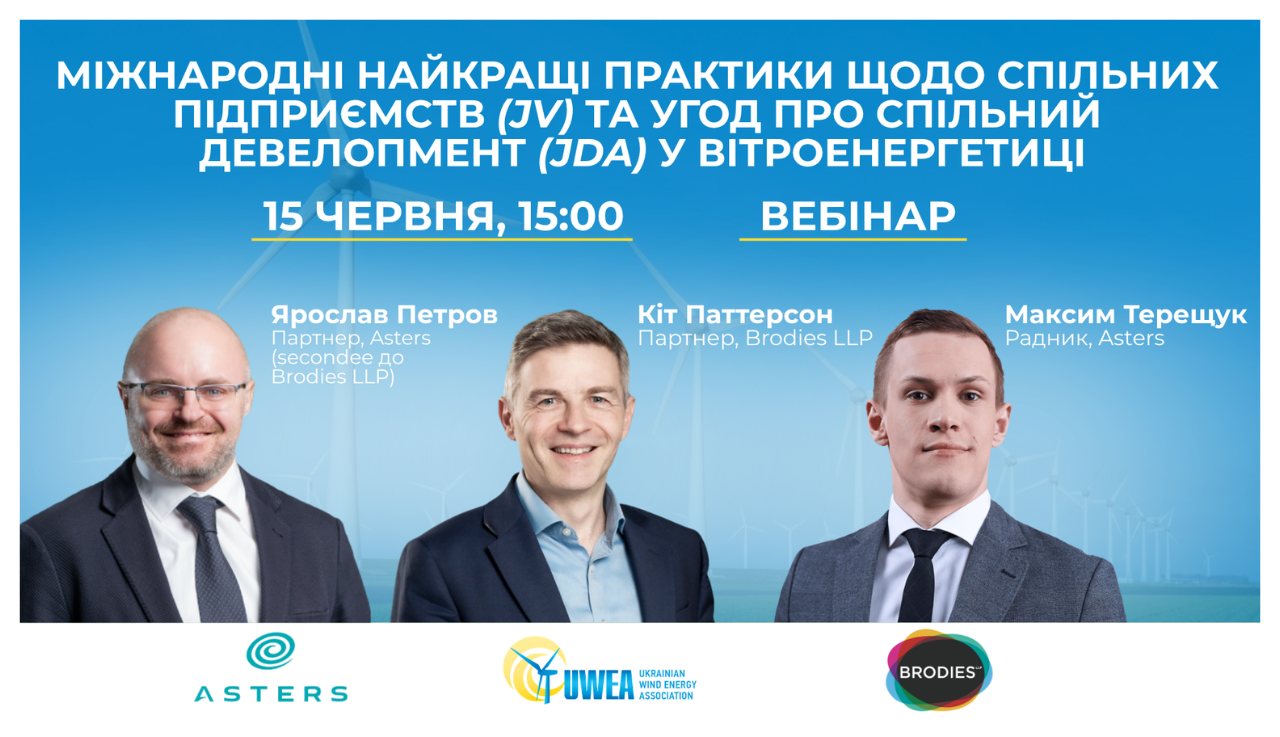
On June 15, the Ukrainian Wind Energy Association, in partnership with the law firms Asters and Brodies LLP, held another webinar as part of the “UVEA Webinar Series” on the topic: “International Best Practices for Joint Ventures (JV) and Joint Development Agreements (JDA) in Wind Energy”.
Proper structuring of a partnership is the foundation of its longevity. In order for cooperation to be effective, protect the business from conflicts, and lead to overall growth, key elements of the partnership, including risk sharing between partners, governance and decision-making mechanisms, etc., must be agreed upon at the early development stages. The webinar focused on the issue of partnership models.
The event brought together market participants to discuss effective formats for cooperation between investors and local developers, which is extremely relevant in the context of preparations for a large-scale reconstruction of Ukraine’s energy system.
The following shared their experiences during the webinar:
- Yaroslav Petrov, Partner, Asters (secondee to Brodies LLP);
- Maksym Tereshchuk, Counsel, Asters;
- Keith Patterson, Partner, Brodies.
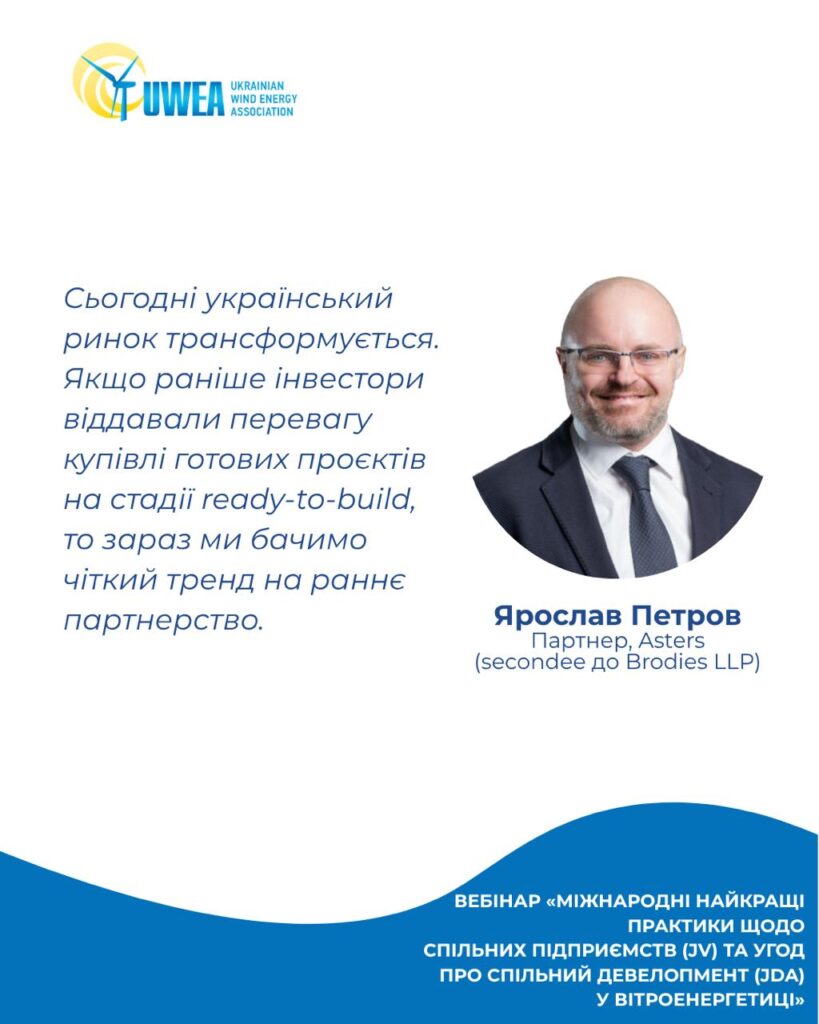
Opening the event, Yaroslav Petrov outlined the changing paradigm of partnership in the Ukrainian wind energy market, emphasizing the need for early capital integration:
“Today, the Ukrainian market is transforming. If earlier investors preferred to buy ready-made projects at the ready-to-build stage, now we see a clear trend towards early partnership. The goal of our event is to demonstrate to developers the best international models of such cooperation so that they can effectively attract international partners at the initial stages of implementing their projects.”
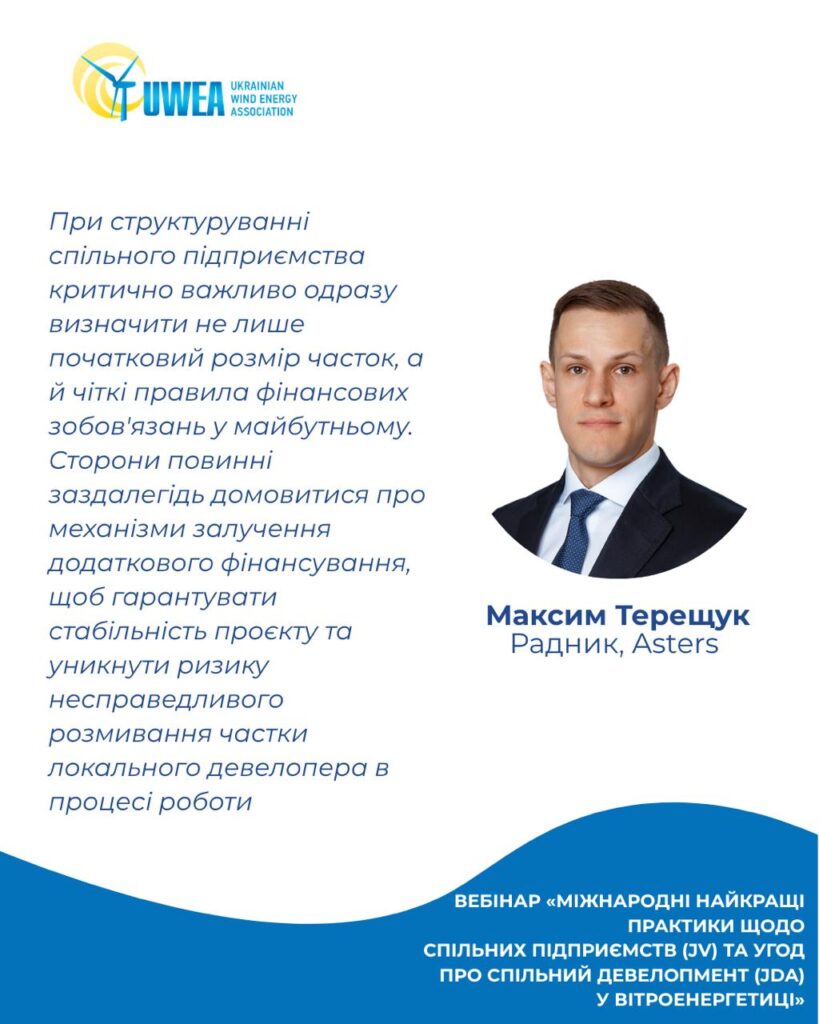
Друга частина вебінару була присвячена архітектурі комерційних умов та розподілу ризиків у in JV and JDA formats. Analyzing the financial obligations of the parties, Maksym Tereshchuk emphasized the importance of fixing them at the initial stage of negotiations:
“When structuring a joint venture, it is critically important to immediately determine not only the initial size of the shares, but also clear rules for financial obligations in the future. The parties must agree in advance on mechanisms for attracting additional financing to guarantee the stability of the project and avoid the risk of unfair dilution of the local developer’s share in the process of work.”
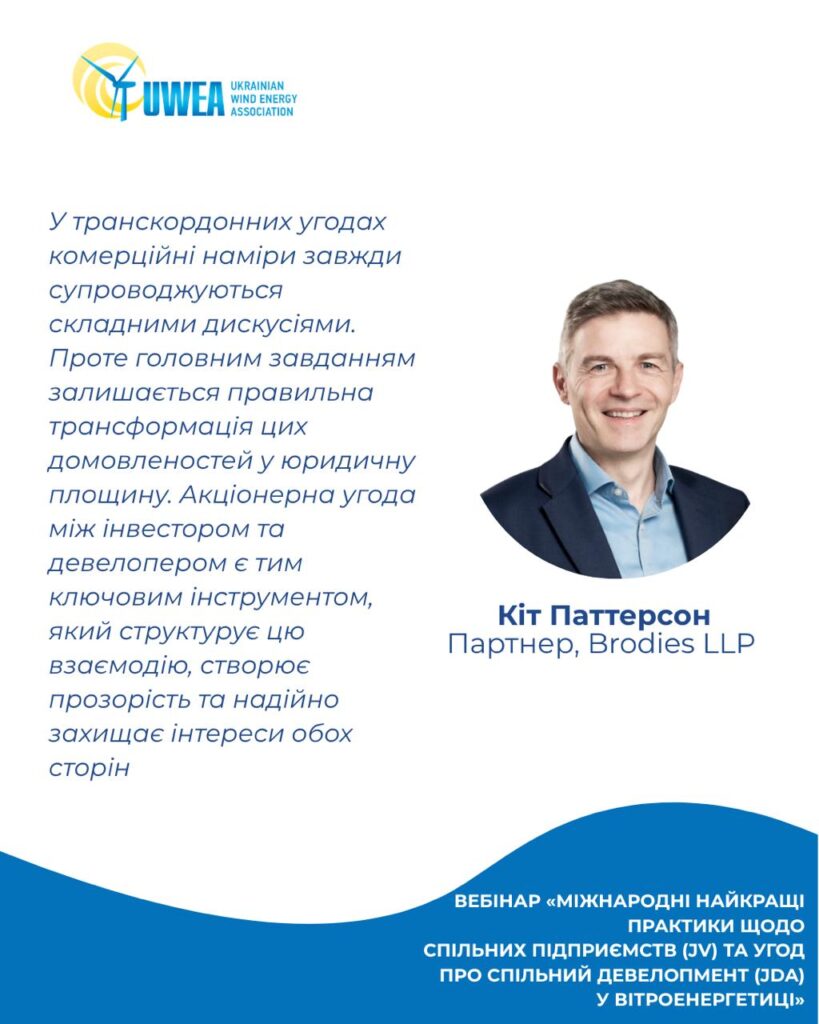
The final block was the speech of Brodies LLP partner Keith Patterson, who revealed the peculiarities of applying English law in cross-border energy agreements. Explaining the need to transition from general commercial agreements to a clear legal framework, he noted:
“In cross-border agreements, commercial intentions are always accompanied by complex discussions. However, the main task remains the correct transformation of these agreements into a legal framework. The shareholder agreement between the investor and the developer is the key instrument that structures this interaction, creates transparency and reliably protects the interests of both parties.”
In conclusion, the speakers jointly discussed practical lessons for Ukraine. It was emphasized that harmonizing national practices of attracting developers with international partnership standards is a key factor in increasing risk transparency and the overall investment attractiveness of Ukrainian wind energy projects.


