
 Authorization
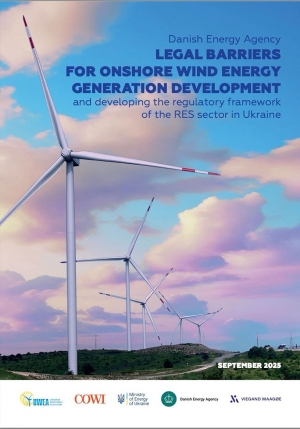
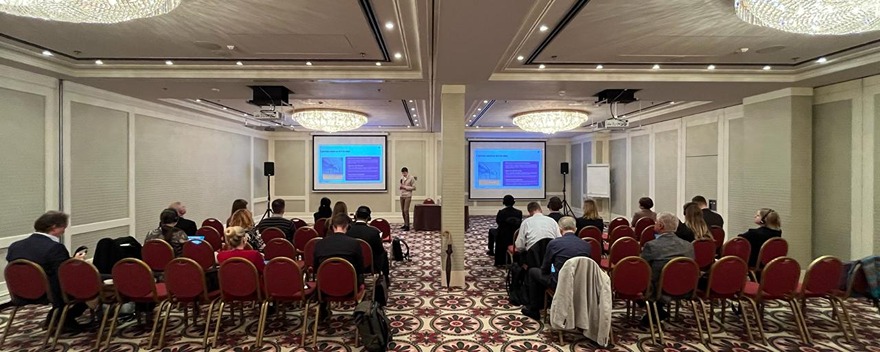
On October 9, 2025, Kyiv hosted a professional discussion dedicated to simplifying permitting procedures in Ukraine’s renewable energy sector. The event brought together representatives of government authorities, international partners, businesses, and industry experts to identify concrete steps needed to align Ukrainian legislation with the requirements of the revised EU Renewable Energy Directive (RED III). The discussion was held within the framework of the project “Legal Barriers to Onshore Wind Energy Development and Regulatory Framework Design for Renewable Energy in Ukraine,” implemented by the Danish Energy Agency (DEA) in partnership with the Ministry of Energy of Ukraine under the Ukraine-Denmark Energy Partnership Programme (UDEPP). The project was developed with the active participation of experts from the Ukrainian Wind Energy Association (UWEA), who contributed to the analytical section of the study and helped shape the key legal recommendations for the wind energy sector’s development in Ukraine.
The event was moderated by Alla Chebotnikova, National Coordinator of UDEPP.
Opening the discussion, Roman Andarak, Deputy Minister of Energy of Ukraine, emphasized the importance of Danish-Ukrainian cooperation in the energy field: “Denmark is one of the leaders in renewable energy, and our collaboration with Danish partners has become a crucial platform supporting Ukraine’s energy sector — from European integration to urgent assistance. The presented report is being carefully reviewed at the Ministry, and its findings will be applied both in dialogue with Parliament and in the preparation of legislation for implementing the Ukraine Facility requirements and RED III.”
In turn, Lars Olaf Søvndahl Petersen, Deputy Head of Mission at the Royal Danish Embassy in Ukraine, highlighted the long-term and systematic nature of the partnership that has continued since 2014: “The report identifies the legal barriers that must be removed to unlock Ukraine’s full wind energy potential. We support Ukraine’s ambition to become a green energy hub for Europe. Wind energy is not only about climate goals — it’s about energy security and resilience.” He added that Denmark, currently holding the Presidency of the EU Council, actively promotes Ukraine’s political and regulatory integration into the European energy space.
Research and Recommendations: A Practical Roadmap for Reform
Following the opening remarks, the consulting company Viegand Maagøe presented the analytical report developed with the support of the Danish Energy Agency.
Monika Izydorczyk, Senior Project Manager at Viegand Maagøe, outlined the study’s objectives: “Our project aims to support Ukraine’s energy transition and preparation for EU accession. We analyzed the existing permitting system and compared it with the practices of Denmark, Portugal, Germany, and other EU member states to propose an efficient, transparent, and predictable model that aligns with RED III requirements.”
Dinne S. Hansen, Marketing Director at Viegand Maagøe, presented the key recommendations for reforming the permitting framework. She stressed that success depends on creating a one-stop-shop system, implementing time-bound permitting procedures, and recognizing renewables as activities of overriding public interest: “Ukraine has a unique opportunity to build a modern, digital, and client-oriented permitting system based on the best European practices.”
From the industry’s perspective, Kyrylo Kostyria, Member of the UWEA Legal Committee and Head of Legal at UDP Renewables, emphasized the practical dimension of reform: “Today, developers face fragmented processes and dozens of permits at different administrative levels. A single transparent mechanism would reduce approval times severalfold and provide investors with clear and stable rules. Spatial planning remains critical — most municipalities still lack approved detailed territorial plans. Without them, renewable energy development is significantly delayed.”
Danish Experience: Coordination as a Key to Success
Katrine Høegh Hilleke, Special Legal Advisor at the Danish Energy Agency, shared Denmark’s experience implementing RED II and RED III: “A key element of the Danish model is the decentralized approach to implementing Renewable Energy Acceleration Areas (RAA). Under our legislation, municipalities act as the main planning and permitting authorities for onshore renewable projects.”
She added: “One of our major lessons is that successful implementation of RED III requires close coordination among all ministries and agencies involved. Inter-institutional cooperation has proven to be a decisive factor in efficiency.”
Ukrainian Perspective: Building a Legislative Foundation for Change
Inna Streltsova, Head of the Renewable Energy Development Expert Group at the Ministry of Energy of Ukraine, presented the ongoing legislative initiatives: “We have developed a draft law that aligns Ukrainian legislation with the EU acquis communautaire. It defines mechanisms for renewable potential mapping, the establishment of acceleration zones, and simplified permitting procedures.”
She also highlighted the prospects for implementing the National Renewable Energy Action Plan until 2030, which envisions mapping Ukraine according to its renewable energy potential. The Creation of digital planning tools such as REZOMA and cross-border RAAs will help achieve this task.
REZOMA: The Digital Map of Ukraine’s Energy Future
Pernille Hagedorn-Rasmussen, Special Advisor at the Danish Energy Agency, presented REZOMA — an innovative GIS-based online platform for spatial planning in renewable energy development: “REZOMA enables the analysis of open cartographic and energy datasets to automatically identify the most promising areas for renewable projects. It’s not just a technical map — it’s a strategic planning tool fully aligned with RED III requirements.”
The platform uses OpenStreetMap as its foundation, integrating data layers from the Global Wind Atlas and solar energy databases. It will be transferred to the Ministry of Energy of Ukraine, with further technical support for its operation insured. The platform’s launch is expected by the end of 2025.
The event concluded with remarks from Vilhelm Rothe, Advisor, Global Cooperation, Danish Energy Agency, and Project Lead: “This project is the result of more than two years of joint work. We are proud that its findings are already being applied in Ukraine’s legislative efforts. Denmark will continue to support Ukraine’s energy transformation — both strategically and practically.”
The Ukrainian Wind Energy Association highly values the study’s outcomes and the discussion, which marked a significant step toward aligning Ukraine’s permitting system with the European framework. We are confident that the implementation of RED III provisions will become a catalyst for Ukraine’s renewable energy market development. Establishing acceleration zones, digitalizing procedures, harmonizing spatial planning, and simplifying permitting are not merely technical reforms — they represent a strategic shift in regulatory philosophy. UWEA reaffirms its readiness to actively participate in drafting regulatory acts and working groups that will ensure effective RED III implementation, as well as to strengthen partnerships among government institutions, developers, investors, and international organizations.
We extend our gratitude to the Danish Energy Agency, Ministry of Energy of Ukraine, UDEPP, the Energy Community Secretariat, and all partners for their constructive cooperation and continued support of Ukraine’s wind energy market.

 Home
Home