
 Authorization
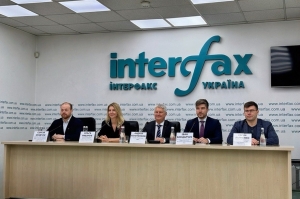
On 19 December 2025, the UWEA held its annual press conference at Interfax-Ukraine titled “Wind & Storage in 2025: A Year of New Decisions, Challenges, and Growth”, dedicated to reviewing the performance of Ukraine’s renewable energy sector in 2025. This year’s discussion, for the first time, focused not only on wind generation but also on energy storage systems (ESS). The pairing of these two technologies is increasingly shaping the architecture of Ukraine’s post-war, decentralized, and resilient power system - one designed to operate amid high volatility, physical threats, and market pressure.
“We are gradually moving from a survival policy to a recovery policy. The work of building a modern, energy-independent state has not stopped - even in the hardest years of war. Renewables, and wind energy in particular, continue to play a key role in this proces - sectors that have demonstrated exceptional resilience and an ability to adapt,” said Andriy Konechenkov, Chairman of the UWEA Board, opening the discussion.
According to him, Ukraine’s total installed wind capacity currently stands at around 2.3 GW, of which 1.3 GW remains in temporarily occupied territories. From 2022 through the beginning of Q1 2025, 248 MW of new wind capacity and an additional 38 MW of pre-owned wind turbines were commissioned in government-controlled areas. UWEA also notes that by the end of 2025, the overall volume of capacity commissioned during wartime will increase by a further 324.4 MW.
Andriy Konechenkov also outlined the sector’s medium-term outlook: “the overall project pipeline across different stages of implementation already exceeds 4.5 GW. Geographically, this is approximately 44% in western regions, 34% in central Ukraine, and 22% in the south - primarily Odesa and Mykolaiv regions. This is a clear signal that development activity is recovering and confidence in the sector is returning.”
Energy storage proved no less dynamic in 2025: “based on our estimates, 534 MW of energy storage systems were commissioned in Ukraine over the past year, effectively marking the emergence of a new, fully-fledged segment of the energy market,” Mr. Konechenkov added.
Following an overview of the statistics and key trends of 2025, Mr. Konechenkov discussed with invited speakers - representatives of UWEA member companies - the year’s main investment signals, practical experience with new market mechanisms, and the role of energy storage technologies in a modern power system. Commenting on the largest private investment into Ukraine’s energy sector during the war - financing for the completion of the second phase of the Tyligulska Wind Power Plant - Yevhen Lapchenko, Head of Regulatory Affairs at DTEK Renewables and a member of UWEA’s Legal Committee, stated: “we are consciously betting on distributed generation. The active phase of completing the Tyligulska WPP is underway, and in parallel we are developing the 650 MW Poltavska WPP. But projects of this scale are impossible without international capital. To mobilize it, we need a predictable regulatory environment, long-term offtake, and resolution of outstanding debt - particularly for 2022. The state has already begun moving toward investors, and it is essential to sustain that momentum.” At the same time, market participants stressed that scaling similar investment cases will directly depend on regulatory stability, access to war-risk insurance, and the predictable application of market-based support instruments.
Presenting the experience of a company that was among the first to test both the market premium mechanism and electricity price stabilization instruments, Olha Rybachuk, Managing Director of Elementum Energy and a member of the UWEA Board, emphasized: “we were among the first to enter the merchant market with both wind and solar plants, and we tested the market premium mechanism for more than a year. In wartime, it is critically important to preserve a range of instruments - business cannot operate in a rigidly regulated environment while carrying elevated risks. At the same time, the market needs further liberalization and predictability. Today the balancing market has significant debt - over UAH 40 billion - yet it is precisely this market that is a key source of revenue for renewables. We are moving in the right direction, but executive implementation often lags behind legislative decisions. Secondary regulation has taken years to develop.”
The need for a predictable regulatory framework was also highlighted by Ivan Bondarchuk, Partner and Head of Energy Practice at LCF and Deputy Chairman of the UWEA Board: “2025 truly became a year of recovery in development and construction. But wind projects have a long development cycle, and without clear rules of the game, investors cannot make decisions. The sector expects improvements to the auction system, revisions to price caps, faster grid connection through the TSO, and implementation of RED III - particularly in defining renewables acceleration areas and applying the principle of overriding public interest. Without this, access to financing will remain limited.” Andriy Konechenkov additionally noted that the market is also eagerly awaiting the President of Ukraine’s signing of the law exempting wind energy equipment from import duty.
Mr. Bondarchuk later focused on whether Ukraine’s current legal framework for energy storage and accumulation meets the market’s and investors’ evolving needs. Given the rapidly growing interest in this technology among UWEA member companies, in March 2025 UWEA expanded its mandate by establishing a dedicated Committee on Energy Storage Development. The discussion was continued by Serhiy Kravchuk, Director of Electricity Trading and Supply at KNESS and Deputy Head of the Committee. Drawing on KNESS’s practical experience in reserve procurement auctions (including FCR), he outlined the potential for scaling energy storage in Ukraine over the next 3-5 years: “The TSO has already effectively covered its needs for primary (FCR) and secondary regulation for the next five years. The next stage is the balancing market and day-ahead arbitrage, where the potential is measured in gigawatts. We are convinced that after the “green tariff” ends (2029-2030), most generators will integrate energy storage as a mandatory component of their projects.”
Yevhen Lapchenko also shared DTEK Renewables’ experience in implementing a 200 MW / 400 MWh energy storage project, built and commissioned in a record 12 months in partnership with Fluence Energy B.V. He noted: “the launch of ancillary services auctions created a real investment signal. Energy storage has significant potential - both for balancing the system and for shifting electricity over time. But here too, regulatory predictability and the absence of abrupt rule changes are critical.”
Olha Rybachuk complemented the discussion with Elementum Energy’s approach: “our company chose a different path - not providing ancillary services to the TSO, but using energy storage to shift electricity over time and optimize our own generation. That objective defined the system size we designed. The equipment has already been delivered to our site, and in 2026 we will begin construction. I also believe energy storage should not be tied to the end of the “green” tariff - it must become an integral part of all new projects. But for that, a clear and stable regulatory framework is absolutely essential.”
Summing up the press conference, participants agreed that wind and energy storage are becoming the backbone of Ukraine’s energy resilience. These technologies reduce import dependence, increase system flexibility, and lay the foundation for post-war economic recovery. “Our task is to make our sector stronger than it was before the war. That requires an honest dialogue between business and the state, and a clear vision of Ukraine’s future energy model. 2026 must become a year of systemic decisions - otherwise we risk losing the momentum we have only just begun to regain,” Andriy Konechenkov concluded.

 Home
Home